
3-Minute Thesis Competition
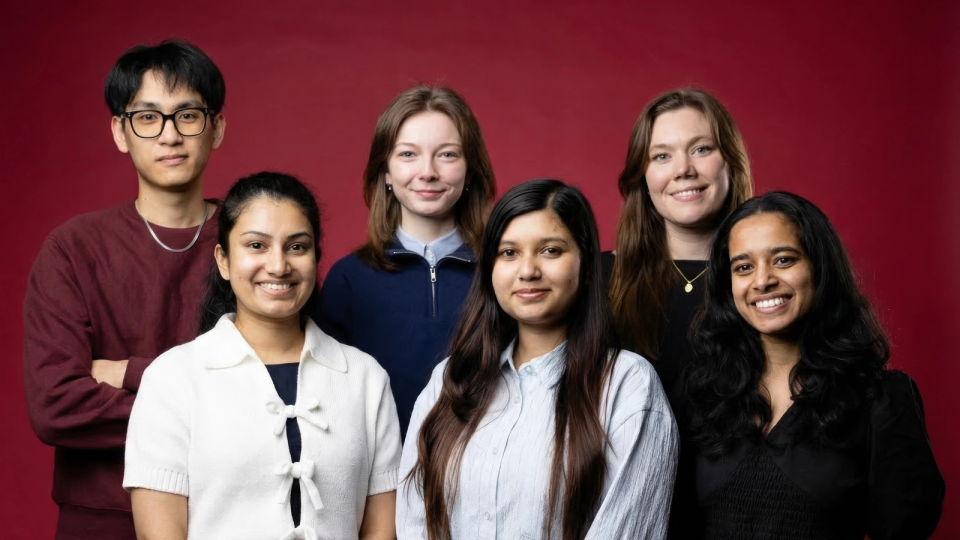
Final Competition
Thursday, March 19, 2026 | 3C00 | 4:30-6:30 pm
The Three-Minute Thesis Competition is UWinnipeg's premiere showcase of graduate student research and ingenuity! Developed by The University of Queensland (UQ), Australia, the Three-Minute Thesis Competition challenges graduate students to distill their complex research into a clear, compelling presentation in just three minutes. Evaluated by a panel of non-specialist judges, students are allowed a single PowerPoint slide to enhance their presentation.
The Winners
At the 2026 Finals, judges chose Imogen Bellinger (MSc, Bioscience, Technology, and Public Policy) for the $1,000 Second Place Prize. Imogen's talk, "Can They Cope? Testing the Limits of Brook Trout in a Changing Climate", was about how elevated temperature and carbon dioxide levels affect juvenile brook trout, and how scientists can use that information to mitigate the effects of climate change on aquatic ecosystems.
Tabitha Evans (MA, Environmental and Social Change) wowed the interdisciplinary audience with “Powering Sustainable Energy Transitions Through Diversity”. Tabitha took home the $500 People’s Choice Award for her talk on the value of studying how interdisciplinary researchers work together to make impactful change.
Ishadie Namir (MSc, Applied Computer Science and Society) won the $2,000 First Place Prize. In her research, presented in three minutes as "Seeing From Space: Helping AI Describe Satellite Images Accurately", Ishadie develops methods to help artificial intelligence (AI) describe satellite images more accurately by teaching it to connect text and images through contrastive learning.
Faculty Award for Outstanding Graduate Mentorship
The 2026 Three-Minute Thesis Competition shared the stage with the announcement of the inaugural recipients of Faculty Award for Outstanding Graduate Mentorship. This award was introduced to celebrate faculty members for The Faculty Award for Outstanding Graduate Mentorship recognizes faculty members with a record of excellent mentorship and/or supervision of graduate students.
Outstanding mentors foster creativity of thought, novelty of research, and provide the underpinnings for graduate students to succeed in and out of academia. Doctor Caleb Hasler and Doctor Sheela Ramanna were announced as the first University of Winnipeg faculty members to receive this honour. It made for a serendipitous evening: Dr. Hasler supervises the 3MT second-place recipient Imogen Bellinger, and Dr. Ramanna supervises first-place recipient Ishadie Namir!
Research in Focus
The Three-Minute Thesis Competition demonstrates how a project's context and impact can be presented through short-form narration and digital media, showing that academic research, knowledge, and processes extend beyond the usual journal articles. The 3MT Finals emphasized the power of oral and visual presentations with a collaboration with the Research Office's Research in Focus Awards Ceremony.
Research in Focus is an annual photography competition that takes us into the field, lab, and stage, offering a closer look at the incredible discoveries and creations of our researchers.
By combining oral and visual presentations in one celebration, this event showcases the remarkable research happening at UWinnipeg.
The 3MT Final Competition is scheduled for Thursday, March 19, 4:30-6:30 pm in 3C00.
Join us to watch the finalists present their research, each in just three minutes, with $2,000 on the line.
The competition demonstrates how a project’s context and impact can be presented through short-form narration and digital medium, showing that academic research, knowledge, and processes extend beyond the usual journal articles.
We are emphasizing the power of oral and visual presentations with a collaboration between the 3MT Finals and the Research in Focus Awards Ceremony.
Research in Focus is an annual photography competition that takes us into the field, lab, and stage, offering a closer look at the incredible discoveries and creations of our researchers.
By combining oral and visual presentations in one celebration, this event showcases the remarkable research happening at UWinnipeg.
Final Competition Prizes
First Place: $2,000
Second Place: $1,000
People's Choice: $500
- Minh Khoi Le (Applied Computer Science and Society MSc), "Why Do We Fall? Using Brain Imaging to Understand and Prevent Falls"
Abstract: Older adults are at a significant risk of falling, even with advances in modern healthcare. Falls can lead to serious consequences, and in severe cases, death. Balance control depends on multiple interacting factors, including posture and attentional control; however, how these mechanisms change with aging is not yet fully understood. In particular, there is limited understanding of how the brain responds during moments of balance instability in older adults. This research uses electroencephalography (EEG), a non-invasive method for recording brain activity, to examine neural responses associated with balance loss during standing and walking tasks. By comparing neural activity across age groups, this study aims to identify age-related changes in the neural control of balance. A better understanding of these mechanisms may help inform evidence-based approaches to balance training and fall risk reduction in aging populations. - Yashodha Charuni Weerasekara (Environmental and Social Change MSc), "Digging into Soil Chemistry to Protect Our Lakes"
Abstract: Eutrophication is a major water quality concern across the Canadian Prairies, particularly in Lake Winnipeg, where phosphorus (P) loading from agricultural soils in the Red River Basin during spring snowmelt drives harmful algal blooms. Soil dissolved organic matter (DOM) can enhance P availability and mobilization by competing for mineral sorption sites and altering soil physicochemical conditions. This research investigates how variability in soil DOM quality influences P mobilization from agricultural fields across the basin. Soil samples collected from 117 agricultural fields will be analysed for DOM absorbance and fluorescence indices, as well as P concentrations. Statistical models will evaluate relationships between soil DOM quality indices and P concentrations. By identifying DOM indicators linked to elevated P mobility, this study aims to improve prediction of snowmelt-driven P export and support targeted management strategies to mitigate eutrophication in Lake Winnipeg. - Tabitha Evans (Environmental and Social Change MA), "Powering Sustainable Energy Transitions Through Diversity"
Abstract: Transdisciplinary research approaches are increasingly recognized for addressing complex environmental problems. Such approaches highlight the need to understand how diverse teams work across disciplines, integrate different kinds of knowledge, and reflect on their practices. My thesis research explores CANSTOREnergy, a pan-Canadian transdisciplinary team focused on sustainable energy transitions in northern and southern Canada. - Imogen Bellinger (Bioscience, Technology, and Public Policy MSc), "Can They Cope? Testing the Limits of Brook Trout in a Changing Climate"
Abstract: Globally, aquatic ecosystems are experiencing increasing temperatures and rising levels of carbon dioxide. While each of these stressors can harm aquatic life on their own, their combined effects may pose a greater threat. Cold-water species like brook trout are especially vulnerable to climate change, yet we still know little about how they respond to the combined effects of these stressors.
In this study, we examined how elevated temperature and carbon dioxide affect juvenile brook trout. Over 34 days, fish were exposed to treatments representing current and future carbon dioxide and temperature conditions. Then we examined their effects on growth, metabolism, thermal tolerance, and behaviour to see how they cope.
Our findings reveal how juvenile brook trout respond to a changing climate, providing valuable insights for conservation and management. By understanding which conditions are most stressful, we can better protect freshwater fish populations as their habitats continue to change. - Ishadie Namir (Applied Computer Science and Society MSc), "Seeing From Space: Helping AI Describe Satellite Images Accurately"
Abstract: Satellite images help us understand our planet, from monitoring cities and forests to responding to natural disasters. Today, artificial intelligence (AI) can automatically describe these images using text, but it often makes confident mistakes by mentioning objects or details that are not actually present. This problem, known as hallucination, limits how much we can trust AI generated descriptions. In this research, I develop a method that helps AI describe satellite images more accurately and reliably. Instead of relying only on language patterns, I first train the model to closely connect images and text using contrastive learning, so it learns which visual features truly match specific descriptions. During caption generation, the model is guided to remain aligned with this visual understanding, reducing false details. The result is an AI system that produces clearer, more faithful satellite image descriptions, making automated Earth observation more trustworthy and useful for real world applications. - Hansika Lewkebandara (Environmental and Social Change MSc), "Grounded, Not Washed Away!"
Abstract: Phosphorus (P) plays a dual role; it is a vital nutrient for plants, yet when it washes away into water bodies such as Lake Winnipeg, it fuels harmful algal blooms. Most P loss from farmlands in Manitoba occurs during spring snowmelt. My research investigates whether gypsum and ferric chloride treatments applied together to soils will reduce P loss while allowing adequate P supply to crops. Soil tests in two farmers’ fields in Manitoba showed that the treatments significantly reduced water-extractable phosphorus, a proxy for P loss. Treatments did not significantly change plant-available P, thus, maintained soil fertility. In summary, the use of gypsum and ferric chloride together was found to be a viable option for reducing P loss from soil, while allowing crops to access P. The results of this research will help us make recommendations to Manitoba farmers that will preserve our water bodies, while ensuring food security.
The semi-finals consist of two heats of eight students each, competing for a place in the March 19 Final Competition. A panel of judges selects which students from each heat move forward, either as an overall winner, or as a wild card. Overall winners are those deemed by the judges to gave given the best overall presentation based on the judging criteria. Wild cards are the students deemed to have given the most engaging presentation, regardless of their scores in the other criteria.
AM Heat
10:30 am-12:00 pm
3C00
Roster
- Md Akif Hussain (Applied Computer Science and Society MSc), "Reading Crisis Through Tweets: What Social Media Reveals When Disaster Strikes"
- Imogen Bellinger (Bioscience, Technology, and Public Policy MSc), "Can They Cope? Testing the Limits of Brook Trout in a Changing Climate" *Finalist - Overall Winner*
- Tarik Aziz (Applied Economics MA), "Mental Ill-health of Working Women: Do Family Formation and Labour Market Conditions Matter?"
- Ishadie Namir (Applied Computer Science and Society MSc), "Seeing From Space: Helping AI Describe Satellite Images Accurately" *Finalist - Wild Card*
- Tabitha Evans (Environmental and Social Change MA), "Powering Sustainable Energy Transitions Through Diversity" *Finalist - Wild Card*
- Briana Liu (Master in Management), "The Missing Piece: Data, Voice, and Participation — Revealing What Goes Unrecorded Among Immigrant Communities (Case Study: Chinese Immigrants)"
- Minh Khoi Le (Applied Computer Science and Society MSc), "Why Do We Fall? Using Brain Imaging to Understand and Prevent Falls" *Finalist - Overall Winner*
PM Heat
1:30-3:00 pm
3C00
Roster
- Prerit Bhandari (Applied Computer Science and Society MSc), "Detecting Digital Crimes in Modern Database Systems"
- Hansika Lewkebandara (Environmental and Social Change MSc), "Grounded, Not Washed Away!" *Finalist - Overall Winner*
- Emmanuel Allieu (Master's in Development Practice: Indigenous Development), "Inquiry: A Perspective on Mende Epistemology" *Finalist - Wild Card*
- Irini Papageorgiou (Environmental and Social Change MSc), "Making Toxic Soils Safer with Biochar and Limestone"
- Yashodha Charuni Weerasekara (Environmental and Social Change MSc), "Digging into Soil Chemistry to Protect Our Lakes" *Finalist - Overall Winner*
Three Minute Thesis Competition participants receive two exclusive training opportunities.
Make Three Minutes Memorable: Constructing a Research Narrative
Friday, February 6
2:00-3:00 PM
Grad Studies Boardroom (1RC029)
Designing an Effective Slide
Friday, February 20
2:00-3:00 PM
Grad Studies Boardroom (1RC029)
3MT Dress Rehearsal
Wednesday, March 4
Time 11:30-4:00
3C00
3MT Headshots for Finalists
Friday, March 6
1:00-4:00 pm
3C00
3MT Judging Criteria
3MT competition judges are asked to evaluate each presentation along each of the following dimensions:
Communication
- Did the speaker use non-verbal communication (i.e. eye contact, voice modulation, body language) effectively?
- Did the speaker use language and terminology that was clear, jargon-free, and understandable to a general audience?
- Did the speaker follow a logical sequence and use time appropriately?
Comprehension
- Did speaker clearly outline the background, significance, and outcome/results of the research?
- Did the speaker make the compelling aspects of the research clear (ex. problem to be solved, puzzle to be addressed, surprising implication, etc.)?
- Did the presentation provide an overall understanding of the research?
Engagement
- Did the speaker capture and maintain your attention and convey enthusiasm for their work?
- Did the presentation make you want to know more without generalizing or trivializing the research?
- Did the PowerPoint slide enhance the presentation - was it clear, legible, and concise?
Presentation Rules:
- A single static 16:9 PowerPoint slide is required, no additional slides are permitted
- The slide is to be presented from the beginning of the oration
- No additional media is permitted
- No additional props are permitted, including costumes, musical instruments, laboratory equipment, etc.
- Presentations are limited to three minutes; competitors exceeding the limit are disqualified
- Presentations are to be delivered in regular prose (e.g. no poems, slam poetry, raps, songs, etc.)
- Presentations must commence from and remain on the stage
- Presentations are considered to have commenced when a presenter initiates either movement or speech
- The decision of the judging panel is final
The Three-Minute Thesis Competition demonstrates how a project's context and impact can be presented through short-form narration and digital media, showing that academic research, knowledge, and processes extend beyond the usual journal articles.
Research in Focus is an annual photography competition that takes us into the field, lab, and stage, offering a closer look at the incredible discoveries and creations of UWinnipeg's Researchers.
In addition to competing in the Three-Minute Thesis Competition, graduate students are also encouraged to submit a photo to Research in Focus. Winners are announced at the 2026 3MT Final Competition.
To see presentations from previous years, please visit 3-Minute Thesis Competitions 2014-2024.