
MSc Alum from the Wijenayake Lab Co-Author Two Papers
Wed. Dec. 3, 2025
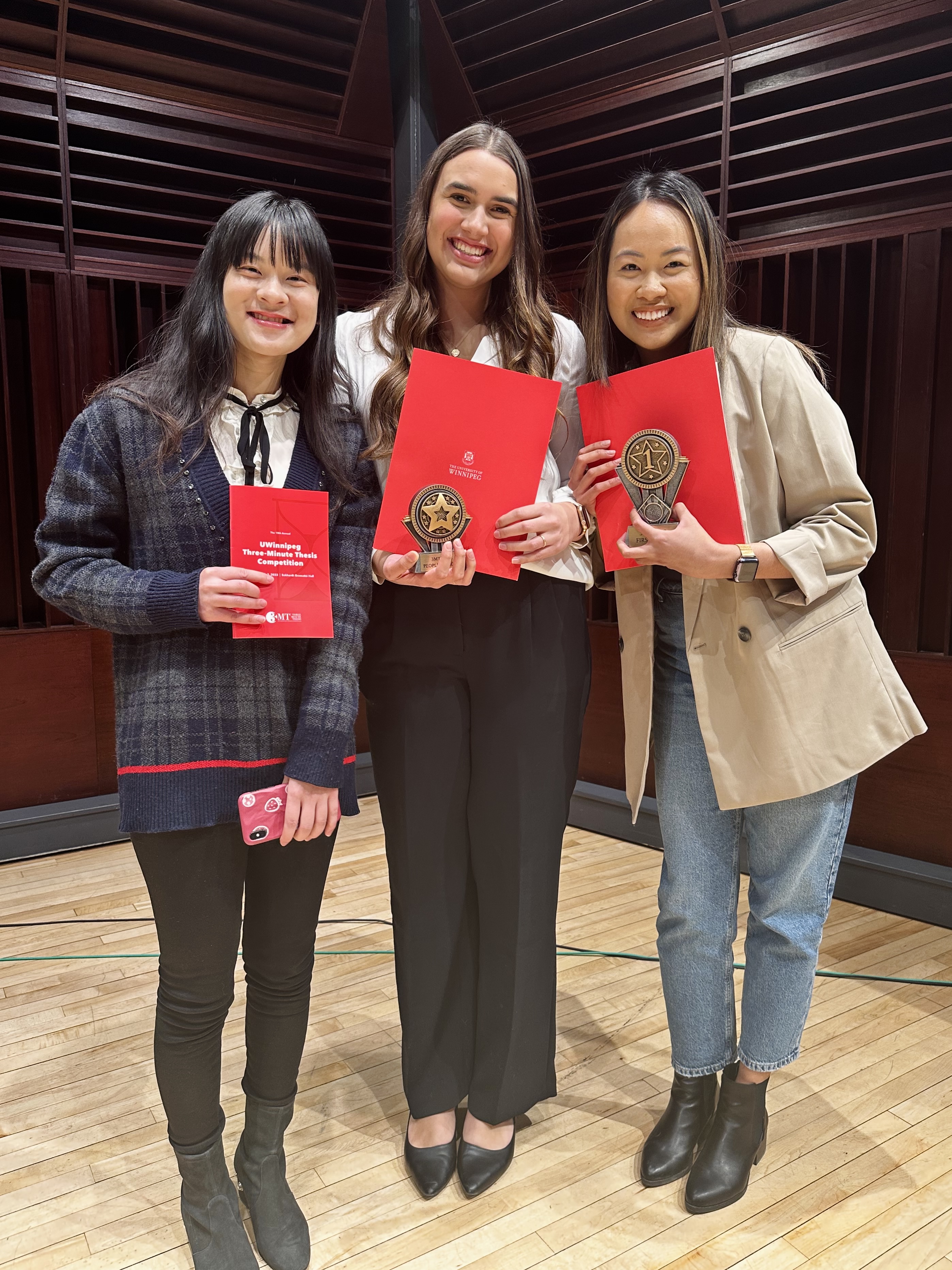
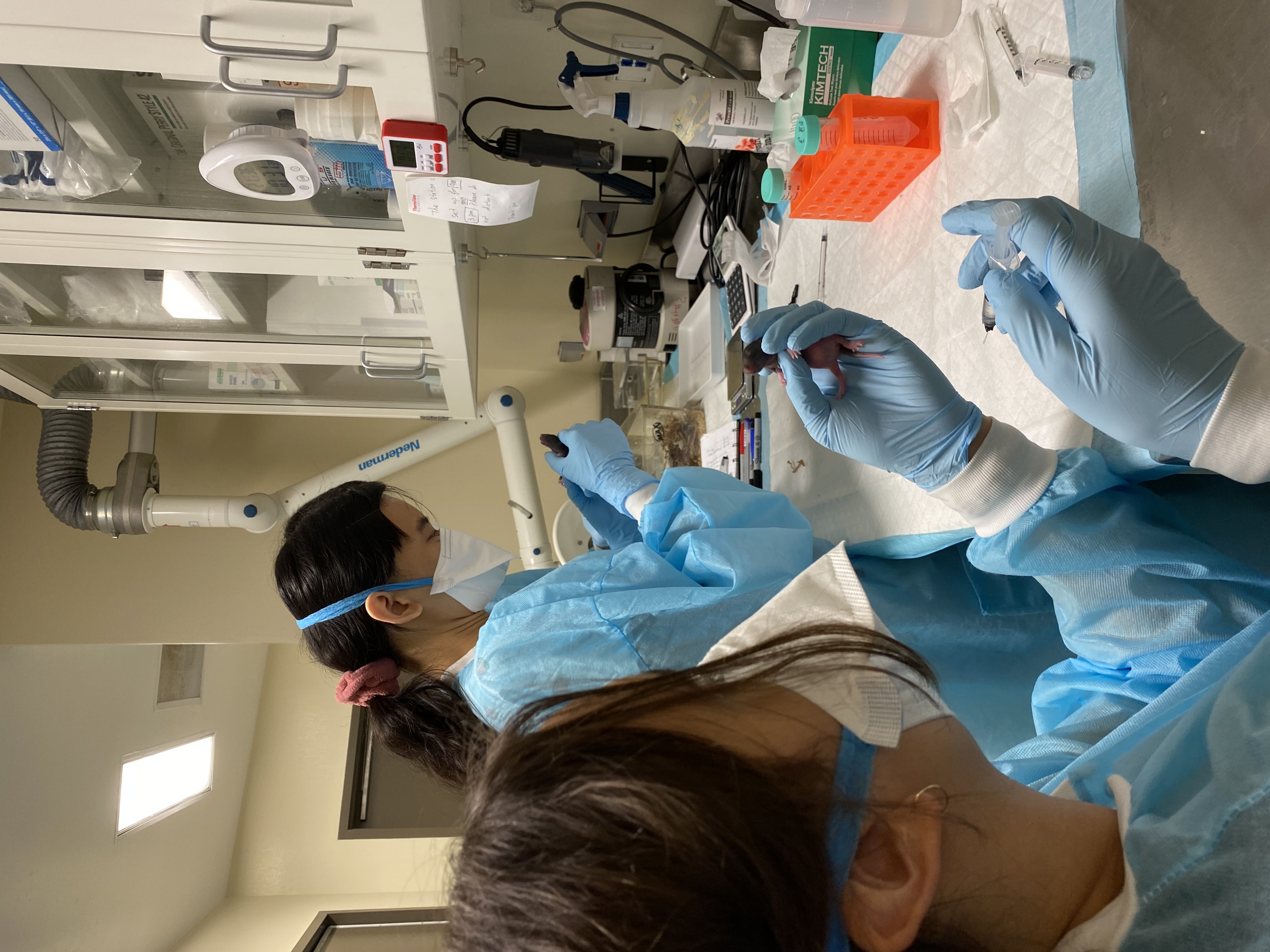 Recent MSc in Bioscience, Technology, and Public Policy graduates Jasmyne Storm and Isabella Lu published two new papers. Both students were part of the Wijenayake Lab in the Department of Biology that explores molecular signals in mammalian milk that shape early growth and development of infants.
Investigating Milk-Derived Extracellular Vesicles as Mediators of Maternal Stress and Environmental Intervention
In “Investigating milk-derived extracellular vesicles as mediators of maternal stress and environmental intervention” published in Molecular Psychiatry, the team studied one such molecular signal called “milk-derived extracellular vesicles (MEVs). MEVs are tiny fat bubbles that transport biologically active material from mother to child during nursing. MEVs are found in the milk of humans, rodents, cows, pigs and even marsupials.
The team found that in rats, one of the regulatory materials MEVs transport is responsive to the maternal environment. The milk of mothers living in low stress environments had different MEV cargo compared to mothers living in more stressful environments. This change was also evident in the rat baby’s hippocampus during nursing and in later life. The hippocampus is a brain region critical for memory formation and storage. Offspring behavior as adults was also positively influenced by this early life exposure. Their data suggests that maternal environments and breastfeeding interventions can influence milk’s molecular signals and support healthy development of offspring.
Activation of the Heat Shock Response by Human Milk-Derived Extracellular Vesicles in Neonates With Perinatal High-Fat Diet Exposure
 In Activation of the heat shock response by human milk-derived extracellular vesicles in neonates with perinatal high-fat diet exposure” published in the Journal of Developmental Origins of Health and Disease, the team studied sex-specific impacts of MEVs in eleven day old rat pups with maternal high fat diet exposure.
Exposure to a maternal high fat diet during pre and postnatal life is associated with metabolic dysfunction in offspring, including obesity. However, exclusive breast milk feeding has been shown to reduce metabolic dysfunction and provide survival benefits. Here, the team investigated if MEVs may provide those survival benefits by working with a quintessential survival pathway in our cells, called the heat shock protein response in the prefrontal cortex, hypothalamus, and the liver of male and female rat neonates.
When proteins become damaged or misfolded, they can lead to disease. The heat shock protein response helps prevent this by repairing faulty proteins and marking irreparable ones for removal. The team found that while the male neonates remained largely unaffected, female neonates that received MEV treatment after birth had a higher activation of the heat shock protein response. The outcomes were even stronger in neonates with early life exposure to a maternal high fat diet. Interestingly, the strongest response occurred in the prefrontal cortex, a region of the brain responsible for stress modulation, decision-making and problem-solving. This suggests that MEVs can positively influence brain health though in a manner that depends on biological sex.
Where are they now?
Jasmyne is currently working as a Research Associate in the Wijenayake Lab and applying to MD programs in Canada for September 2026. She plans to be a clinician scientist.
Isabella currently resides in Shanghai and is applying to PhD programs in Biomedical Sciences in the United States of America for September 2026. She plans to be a biomedical scientist in industry.