Toolkit 3: Community Engagement Events
By Phuong Tran
Summary
Over the course of a year, the South Valour Residents Association (SVRA) safety committee organized five community events to increase the sense of safety in the neighbourhood. The events, which used the approaches identified in the background research, included:
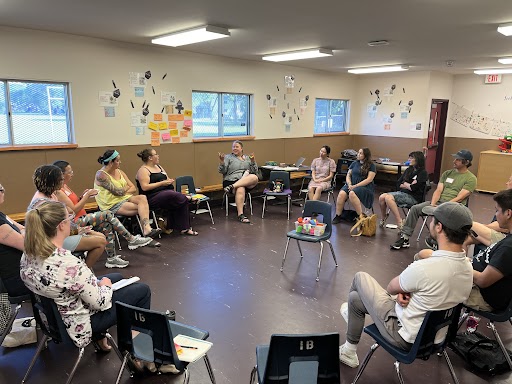
- A Harm Reduction Workshop
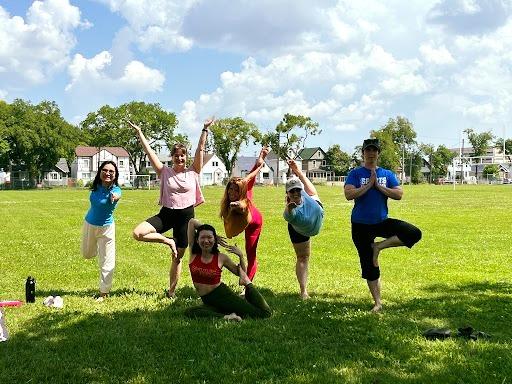
- An Outdoor Yoga Session
- A Garden Gathering in coordination with North Valour Resident Association and Unity Garden
- A Stargazing Night (postponed due to weather)
- A Scavenger Hunt
Each event followed a consistent planning and implementation approach to ensure they were relevant to community safety and aligned with the literature review, logic model, and asset mapping results.
In this toolkit, we use the Scavenger Hunt as an example of an event you can host in your community.
Why host a Community Engagement Event
Community engagement events can support all six approaches to community safety that are outlined in the background research, and are especially effective at creating opportunities to build social capital and connect with neighbours. Some events, such as tree planting and harm reduction workshops, can also engage community members in cultivating greenspace, promoting harm reduction, and responding to crises with care.
A Scavenger Hunt invites residents to search for “community treasures” in a defined area in the neighbourhood. In our case we used the greenspaces in and around the local community centre and school.
A Scavenger Hunt can help:
- Bring community members together around a fun, family-friendly activity.
- Allow community members to see and recognize each other outside of their houses and yards.
- Foster interaction and connection between neighbours.
- Encourage visible use of public greenspace.
- Prompt residents to reflect on and engage with the physical space of the neighbourhood.
- Motivate new volunteers.
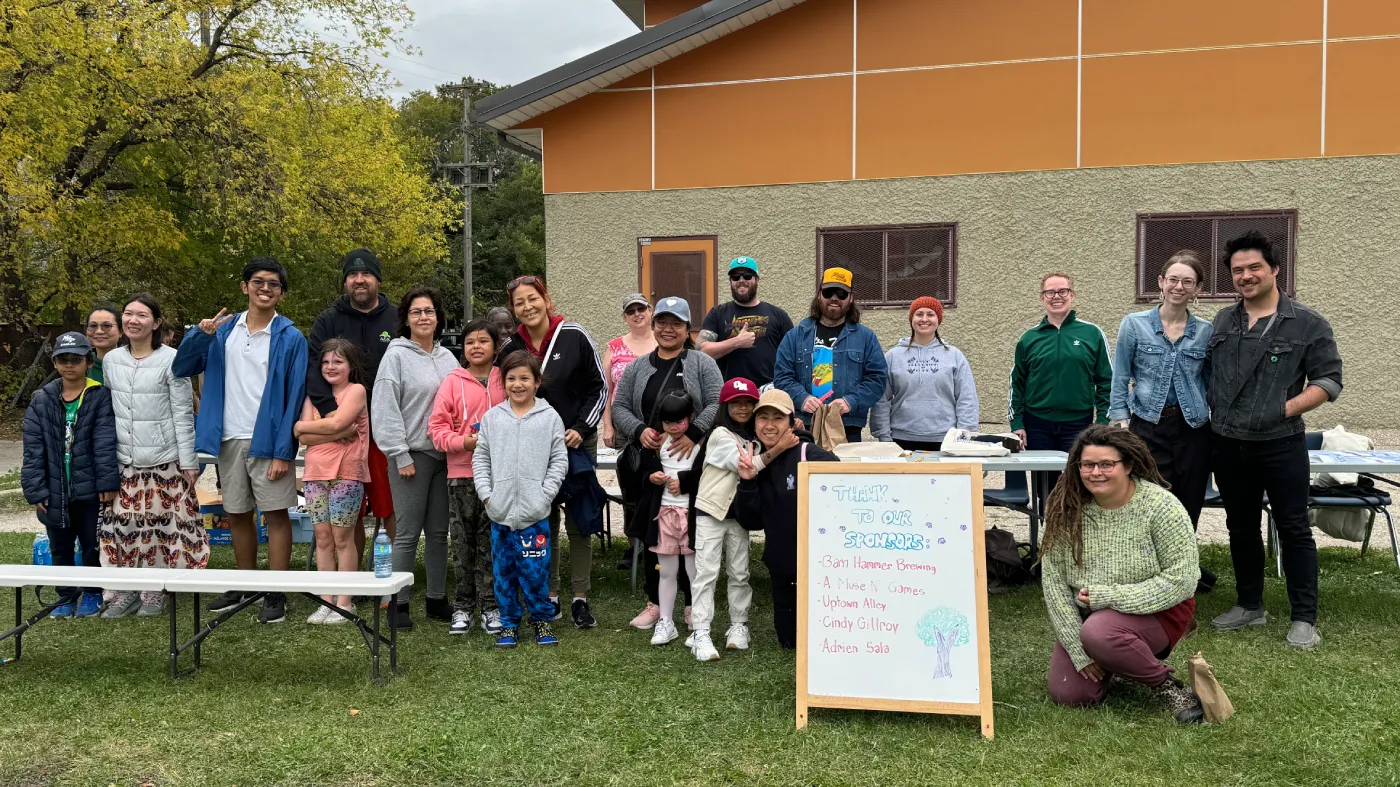
For SVRA, the event fostered conversations about community cleanup, pedestrian safety, local food security initiatives, and access to recreational spaces - issues we subtly highlighted in the scavenger hunt clues and debrief materials. Turnout to the event exceeded our expectations!
Things to consider
- Place-specific content: Clues should be fun and connected to meaningful places in the community.
- Accessibility: Will people of all ages and abilities be able to join, including kids, seniors, and people who are pregnant?
- Weather: You may need a backup date in case of rain, extreme heat, or wildfire smoke. Keep an eye on the weather forecast!
- Timing: What time of year would work best for your community? Will people be around and available? Will the event conflict with other local activities?
- Safety: If the event will require participants to cross streets or encounter tricky terrain, how will you help guide and direct them safely?
- Promotion: How will you spread the word? Will you use social media, in-person conversations, flyers, or reach out directly to local organizations?
- Budget: Do you have resources for decorations, prizes, snacks, and posters? If not, how can you get the necessary supplies ?
- Volunteers: Who will promote the event, prepare the materials, lead the event, and clean up?
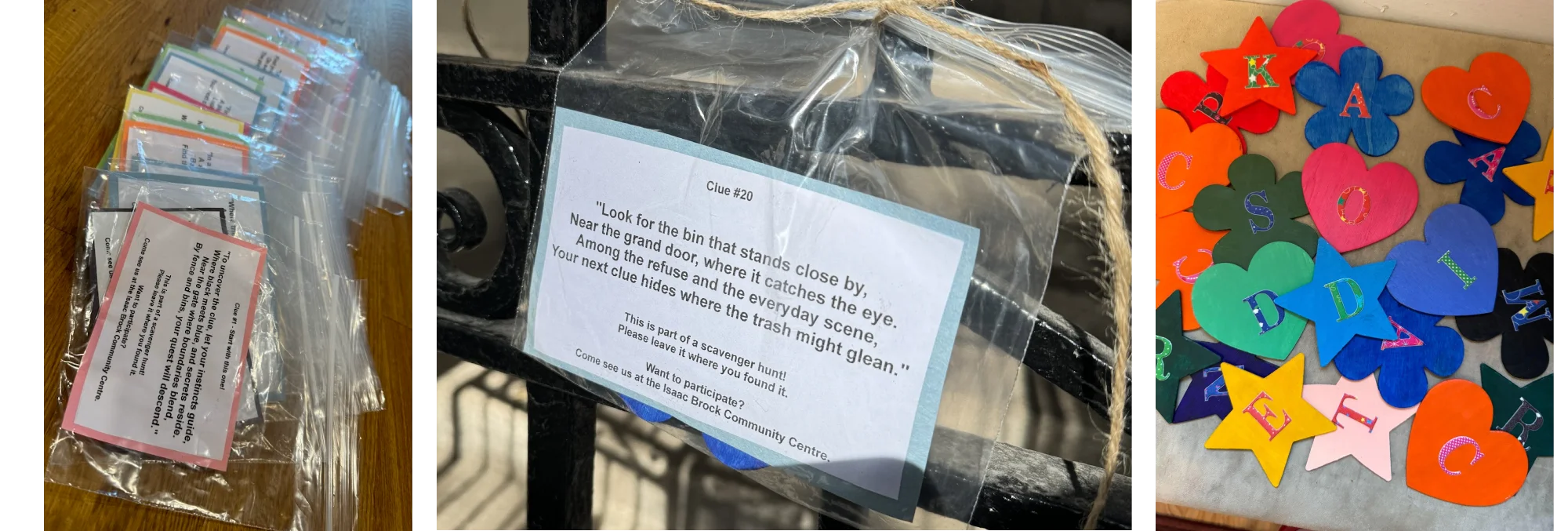
Our Scavenger Hunt prompted participants to follow 21 clues to find letters spelling out the names of three community treasures: Omand’s creek (a local park that runs along the Assiniboine river), Isaac Brock (the local school), and the neighbourhood tree canopy.
The clues were phrased like riddles that participants had to decode to figure out where to go next. Successfully collecting and solving all of the clues posted around the school and community centre greenspaces gave participants the letters to solve the puzzle.
Solving the puzzle led them back to homebase, where there were prizes, snacks, goodie bags, and the opportunity to chat with neighbours.
- Place-specific content: The clues were important to the neighbourhood and to the work that our residents’ association does in the community. Each clue was an asset that appeared in our asset mapping activity!
- Accessibility: We originally imagined this as an Amazing Race-style activity where participants would race from location to location throughout the neighbourhood. We decided instead to focus the event in one shared space (the community centre and school greenspaces) to allow for deeper engagement with other participants, and to make it easier for people of all ages and abilities to participate.
- Timing: We picked early October, the sweet spot in the year when the weather was still good, it wasn’t a holiday, and kids were already settled into their school routine
- Safety: We limited risk by containing the hunt to the community centre and school greenspaces, but posted volunteers around to help guide participants if they got stuck.
- Promotion: We used our usual promotion approach (see Toolkit 5): social media, in-person conversations, flyers, and reaching out to local organizations.
- Budget: We spent a total of about $175 on prizes, snacks and goodie bags, decorations, and printing posters.
- Volunteers: Our eight-member board was all involved, plus volunteers who distributed the flyers to all neighbourhood residents.
To plan this and other successful community engagement events, Phuong designed a proposal and planning process that outlined the event idea, how and why it fit within our safety project, and what success would look like. This helped us envision the idea and stick to our priorities.
- Event Proposal Template [PDF]
- Calendar and rationale for proposed events [PDF]
- Sample letter to talk to local businesses about the event and sponsorship [PDF]
Templates and samples for a scavenger hunt
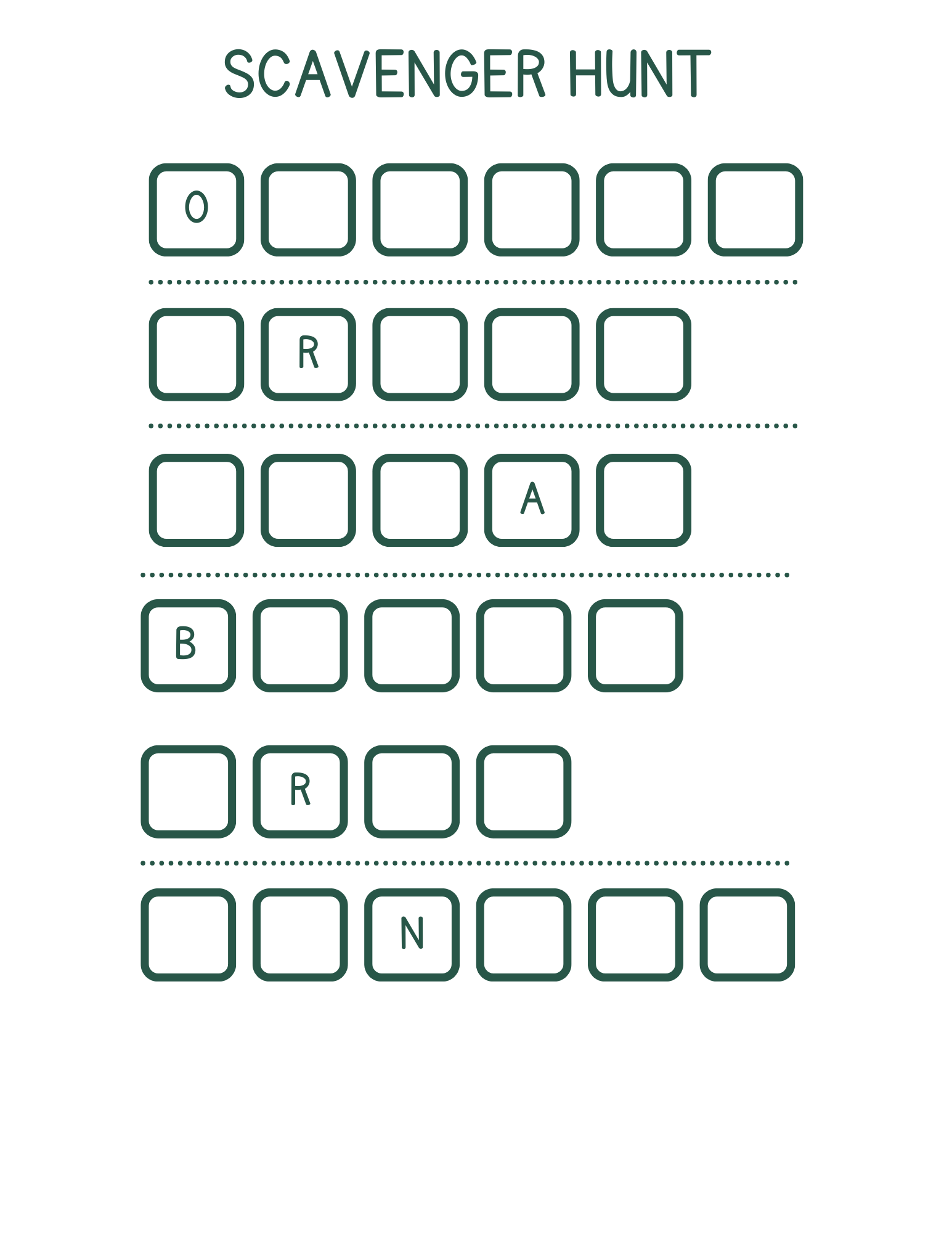
An overall plan guided how we prepared for the hunt and made sure everyone knew what to do on the day. We distributed flyers in residents’ mailboxes in the weeks before, and spread the word on social media and our newsletter, so that the community knew it was happening. Residents signed in to play the game, which is helpful for recruiting volunteers and staying in touch with community members. We had a riddle document that showed how all of the parts of the hunt fit together. Finally, participants took a blank sheet with them to fill in the letters from every riddle they solved.
- Plan for the Scavenger Hunt event
- Sample flyer
- Sample text for social media posts and newsletter
- Sign-up form
- Example clues, riddles, and treasures
- This is the sheet given to game players to fill in all the spaces. The fastest people had the chance for a prize draw at the end of the event.