
Community Safety Toolbox
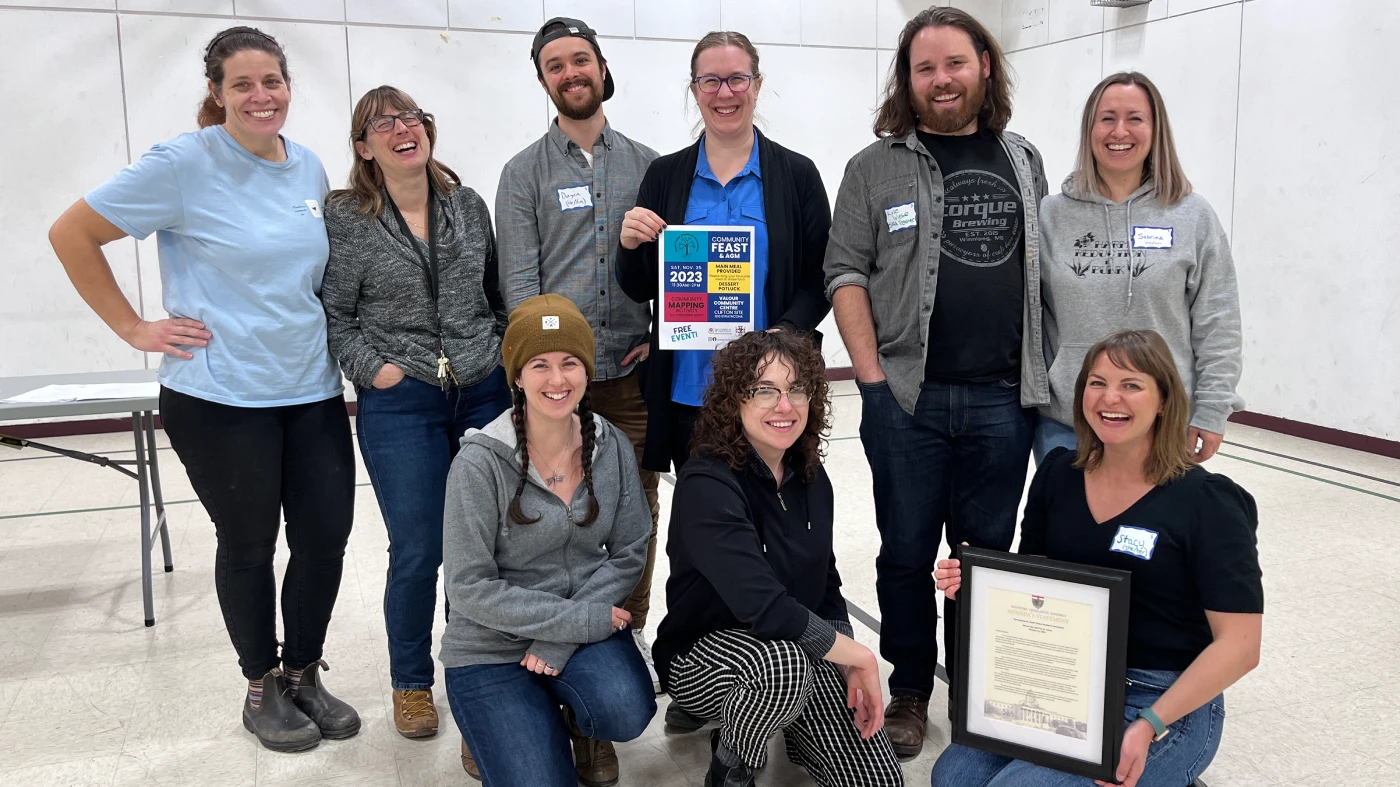
Welcome to the Community Safety Toolbox!
This toolbox is the result of a four year project that gathered knowledge about caring and inclusive approaches to community safety. Throughout the project the research team worked with a variety of community members and partners to put some of those approaches into action in West End Winnipeg. The project was conducted by South Valour Residents’ Association in collaboration with researchers in Urban and Inner-City Studies at the University of Winnipeg.
We hope that our work will be useful to you and your community. Please use and share this resource freely, and cite us as the source when you can: South Valour Residents Association (2025) Community Safety Toolbox.
This toolbox includes:
- How the project began
- The research we gathered to inform our actions
- Toolkits that break down how we engaged community through a series of different activities
- Each toolkit explains why you might want to host an event, conduct a survey, or engage in other activities, how we did it, what the event achieves, as well as practical tools including templates and step-by-step guides.
If you have questions, please reach out to info@svrawinnipeg.org.
This work is licensed under CC BY-NC 4.0. To view a copy of this license, visit Creative Commons.
South Valour Residents’ Association (SVRA) is a volunteer-run non-profit organization in the area of West End Winnipeg that is bounded by Ellice and Portage Avenues to the north and south, and Erin Street and Denson Place to the east and west. The organization was formed in 2020.
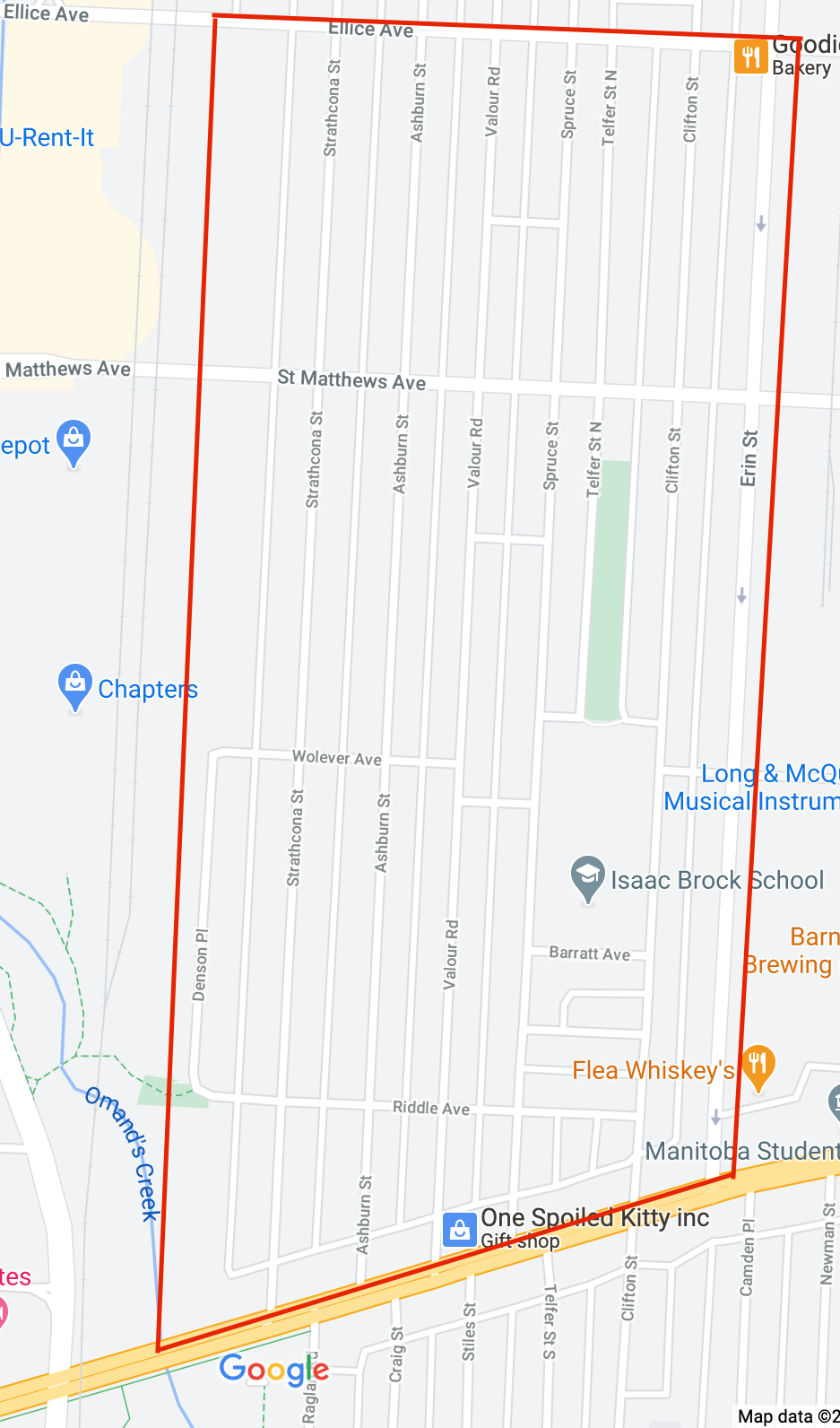 One of the SVRA’s first steps was to survey neighbourhood residents to find out who lived in the neighbourhood and what their priorities were. Safety came up as a top priority, followed closely by improving and increasing greenspace and opportunities for community connection.
Some community members called for more police and the establishment of Neighbourhood Watch patrols to increase their sense of security. Others said patrols and police make them feel less safe, and they didn’t want the residents’ association to risk harming people in the community who already face hardship because of things like poverty, racism, and trauma. Community security projects often cause harm to marginalized people .
The SVRA was working on establishing our guiding vision and values while also thinking about how to take action on neighbourhood safety concerns. We reached out to University of Winnipeg professor and researcher Dr. Julie Chamberlain to find out more about what other communities have done, and our collaboration began.
Our focus has been on taking a grassroots, anti-oppressive action on community safety. Grassroots means action that residents can take at a neighbourhood level, and anti-oppressive means challenging inequality and oppression wherever it exists..
This focus came together perfectly with the SVRA’s mission, vision, and values:
- Mission: To foster community well-being in South Valour, connecting residents to build an inclusive and supportive neighbourhood.
- Vision: A thriving community where everyone feels they belong.
- Values: Inclusivity, positivity, collaboration, care, and being evidence informed. Being evidence-informed means basing decisions on research and other reliable forms of knowledge.
In the first part of our safety project, we gathered knowledge about grassroots, anti-oppressive approaches, and used that to inform a conversation with community members about how SVRA could put these approaches into action. You can find information and tools from this phase under “Background Research” and “Toolkit 1: Community Safety Conversation”.
Funds from the University of Winnipeg and the Manitoba Research Alliance (MRA) allowed us to hire a student to look for existing sources on the topic (articles, websites, reports) and put them together in a way that was easy to understand.
The report created by Dagen Perrott was shared far and wide across Winnipeg. We heard from city workers, school trustees, and neighbourhood residents that they used the report to inform their conversations and planning about safety. We presented the report to interested community organizations across the city, and our work was featured on a CBC Radio Manitoba story about safety and property crime in Winnipeg.
You can find a reflection on this part of the project in Engaged Scholar Journal.
The knowledge featured in the Background Research section became the foundation for the next part of our project, and also shaped most other SVRA activities, as you will see in the toolkits.
We planned the next steps as a critical participatory action research project, this time with funding from the MRA to hire a student and a community researcher to play the central roles in the project. They focused on connecting with residents, plotting out our strategy, and planning meetings and events.
Critical participatory action research (CPAR) is a collective, self-reflective, learning-oriented way of doing research in which the researchers are full participants in an initiative. In our case, the initiative is community action on safety in South Valour and the researchers are mainly the members of the SVRA Safety Committee.
In CPAR, people act and research together to change their social world and to reflect on their practices and their thinking. It doesn’t follow a straight line of research steps; it unfolds in a spiral with the people who share ownership of the research project planning, acting, observing, and evaluating together as a self-aware, self-reflexive, and self-critical community. That’s us!
*This book was an important resource for planning the project: Kemmis, S., McTaggart, R., & Nixon, R. (2014). The action research planner: Doing critical participatory action research. Springer.
This toolbox is a result of the CPAR project, and is part of our own reflection and learning about what we have done.
Toolbox authors
- Stacy Cardigan Smith
- Julie Chamberlain
- Dagen Perrott
- Phuong Tran
Toolbox editors
- Beth Schellenberg
Project contributors
- Sindy Ackerman-Stratton - SVRA board member
- Rachel Andrushuk - SVRA board member
- Lisa Bukowski - SVRA board member
- Stacy Cardigan Smith - SVRA board member
- Julie Chamberlain - University of Winnipeg professor
- Jason Chartrand - SVRA board member
- Trie Tuttman - SVRA board member
- Hillary Gair - SVRA board member
- Jesse Gair - Community leader
- Alexandra Guemili - Safety Committee member
- Duncan Hamilton - Community volunteer
- Sabrina Harding - SVRA board member
- Liz Jackimec - SVRA board member
- Liz Keith - Community volunteer
- Daniel Leonard - SVRA board member
- Nanette McKay - Facilitator
- Jazmine Moffett-Steinke - University of Winnipeg student research assistant
- Ly (Haily) Nguyen - Safety Committee member
- Andy Oepkes - Safety Committee member
- Leanne Penner - Community volunteer
- Dagen Perrott - University of Winnipeg student research assistant
- Nadine Powell - SVRA board member
- Teresa Prokopanko - SVRA board member
- Phuong Tran - SVRA staff (Community Engagement Coordinator/Researcher)
- Kyle Wiebe - SVRA board member
- Shellon Williams - Community volunteer
- Joe Winnemuller - Community volunteer
Funders
- Social Science and Humanities Research Council of Canada through the Manitoba Research Alliance’s Partnership Grant Community-Driven Solutions to Poverty: Challenges and Possibilities.
- Valour Road Community Centre
- Peacing It Together
- West End BIZ
- Cindy Gilroy, City Councillor for Daniel McIntyre
- Adrien Sala, Member of Manitoba Legislature for St. James

