Human Rights Alumni of the Month Profile- April 2026
Thu. Apr. 9, 2026
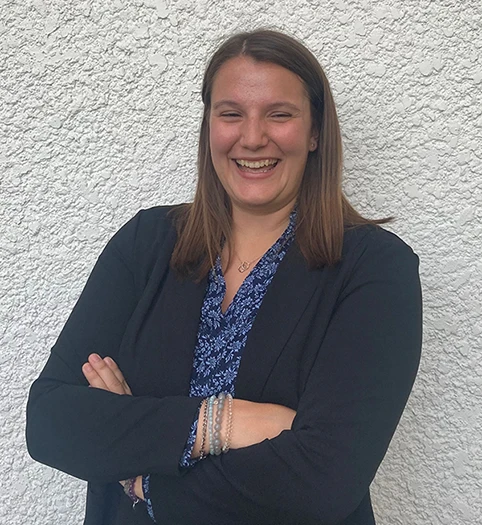
Fiona Vowell
BA Human Rights & Conflict Resolution Studies, 2021
For Fiona Vowell, Human Rights was a way to give shape to something she already cared deeply about: supporting people in her community, nationally, and internationally. She was drawn to the combination of Human Rights and Conflict Resolution because it offered both direction and depth from the beginning. Studying in Winnipeg made those connections tangible. Being on a downtown campus meant discussions about rights were never far removed from the realities of the city around her. With both the Canadian Museum for Human Rights and the National Centre for Truth and Reconciliation located nearby, Fiona found herself learning about human rights while surrounded by institutions actively engaged in those conversations.
That connection between the classroom and the wider world shaped the courses Fiona gravitated toward. In HR-2200 History of Human Rights in Canada, she examined how historical events continue to shape public memory and monuments in Canadian cities. In HR-3410 Models of Transitional Justice, she explored how societies attempt to address conflict and repair harm after periods of violence. Later, in HR-4350 Post-Conflict Truth, Memory, and Reconciliation, she studied the work of Truth and Reconciliation Commissions in Canada and internationally. These courses pushed her to think more deeply about how justice is pursued after conflict and how historical harms influence the present.
Toward the end of her degree, Fiona's focus had shifted toward examining how policies work in practice. Her Human Rights Capstone major paper looked closely at the Safe Third Country Agreement, a Canada-U.S. asylum policy that restricts where refugee claimants can make their claims, and questioned whether it functions as an effective policy. Her Conflict Resolution Studies senior thesis explored whether women's meaningful participation in Truth and Reconciliation Commissions, particularly in South Africa, or in peace processes can lead to improved women's rights and socio-economic outcomes. Both projects reflected her growing interest in the relationship between policy decisions and the lives of the people affected by them.
At the same time, Fiona became increasingly involved in research and academic work within the program. As a Research Assistant she prepared literature reviews and research memos for a new strategy on Private Sponsorship. As a Senior Research Assistant she contributed to literature reviews prepared for publication, helped draft ethics and grant applications, developed and implemented data collection instruments, and conducted data analysis. This work eventually led to becoming a co-author on an article published in the Journal of Human Rights Practice. Learning how research develops from early questions into published work became one of the most meaningful parts of her academic experience.
Alongside this research work, Fiona gained practical experience through two very different practicum placements. She spent three months in South Africa working in a preschool, translating classroom learning into practice in a completely different cultural setting. Living and working in another country created learning experiences beyond textbooks and lectures. Back in Winnipeg, she completed a Conflict Resolution Studies practicum in an inner-city middle school, where she helped mediate conflicts and support students navigating disputes. Together, these placements showed how the skills developed through her studies can be applied in everyday situations where communication, patience, and trust matter.
During this time Fiona was actively involved in student leadership and community engagement. She served as co-chair of the Global College Student Advisory Council for two years, helping organize events and initiatives for the student body. She volunteered as a homework tutor with NEEDS (Newcomer Employment and Education Development Services) and served as a board member with the Institute for Women's Rights-Manitoba and the Canadian Coalition on Youth, Peace, and Security. Through connections at Global College she also became involved with the Institute for International Women's Rights MB, which led to participating in the United Nations Commission on the Status of Women in New York. These experiences helped her see how local community work connects with national and international conversations about policy and human rights.
Fiona credits the Human Rights program not only for building her knowledge of history and international law, but also for shaping how she approaches complex issues and public policy.
“Majoring in Human Rights gave me a strong foundation for the work I do today, in technical knowledge regarding history and international law. The human rights professors are also some of the best teachers I had during my degree and helped me to develop critical thinking skills that have been invaluable in my career.”
After graduating in 2021, Fiona joined Immigration, Refugees and Citizenship Canada, working in policy. Her work later took her abroad as a Foreign Service Officer at the High Commission of Canada in Pakistan.
Looking back on her time in the program, Fiona encourages future students to stay curious and take initiative. She suggests choosing courses that genuinely interest them and taking time to speak with professors, explore research opportunities, and pursue practicum placements whenever possible.