
From Classroom to Conference
Mon. May. 11, 2026
UWinnipeg students take research on 911 wellness to Philadelphia
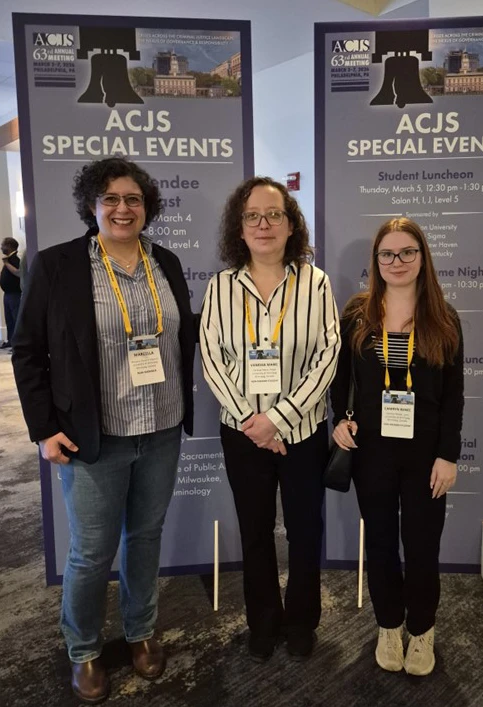
When I boarded a flight to Philadelphia this spring with two of my students, we weren’t just attending an academic conference—we were stepping into the professional world of criminal justice research.
Together, we represented the University of Winnipeg’s Faculty of Arts at the Academy of Criminal Justice Sciences Conference (ACJS), one of the most prominent gatherings of scholars and practitioners in the field. There, my students, Vanessa Marie Flood and Camryn Lynn, presented research on the wellness of 911 dispatchers and call takers—an often-overlooked group within public safety.
Elevating Invisible Work
Our study sheds light on the emotional and psychological demands placed on emergency communication professionals, who routinely handle high-stress, life-or-death calls without ever leaving their desks. By focusing on dispatcher wellness, we contributed to a growing body of research that seeks to better understand and improve working conditions across the justice and public safety sectors.
For Vanessa, an Indigenous student, the experience carried a particularly profound meaning—one that extended beyond the conference itself and into her broader academic journey. Reflecting on her path, she noted how moments like this can challenge long-standing barriers: “As a first-generation university student in my family, I have found that this experience has broken down the barriers that Indigenous and marginalized students face,” she explained. “We do have immense value to contribute to the professional and academic stage, even from a global perspective.”
Building on this sense of growth and recognition, Camryn, a Psychology honours student, similarly emphasized how the experience expanded her academic perspective. “Attending the ACJS conference exposed me to research at the intersection of psychology and criminal justice,” she noted. “Presenting on emergency communicators was especially meaningful, as I had contributed to the project as a research assistant.”
For Vanessa, who just completed her honours thesis in Criminal Justice, the experience carried added meaning. “It provided me with a sense of ease coming back and presenting my Thesis at CJ Day,” an event promoted by the Criminal Justice Department for students to present their honours thesis. “Thanks to this experience, I was empowered to present my thesis on a topic that I was knowledgeable about and had a newfound confidence in presenting to my fellow students and professors with the understanding and appreciation that we are all learning together,” she noted.
Camryn Lynn echoed that sentiment, emphasizing how the experience allowed her to sharpen her communication skills: “This unique opportunity strengthened my confidence as a presenter.”
Beyond the Podium
While presenting their research was a highlight, the conference offered far more than a single moment at the podium. Both students immersed themselves in panels, workshops, and conversations with leading scholars and practitioners from across North America and beyond.
They were exposed to emerging research, innovative methodologies, and pressing issues shaping the future of criminal justice—from technological change to mental health and institutional reform. Just as importantly, they began building professional networks that could shape their careers for years to come.
“The conference allowed me to build meaningful connections with fellow scholars through networking,” Lynn noted.
A Faculty Committed to Professionalization
Opportunities like this are not accidental—they reflect a broader commitment within the University of Winnipeg’s Faculty of Arts to support student development beyond the classroom.
By encouraging undergraduate students to engage in research, attend conferences, and present their findings, the Faculty is actively promoting the professionalization of its students. This approach positions criminal justice not only as an academic discipline, but as a practice science—one grounded in real-world application, evidence-based policy, and meaningful social impact.
As the supervisor of this project, I cannot overstate the importance of experiences like this. When students present their work in professional spaces, they begin to see themselves as contributors to the field—not just learners. That shift is truly transformative.
Looking Ahead
For Flood and Lynn, the trip to Philadelphia marks just the beginning. Armed with new knowledge, skills, and connections, they returned to Winnipeg with a deeper understanding of their field—and their place within it.
Their journey reflects what is possible when mentorship, institutional support, and student initiative come together. And as the Faculty of Arts continues to invest in these opportunities, more students will find themselves moving from classroom discussions to conversations on the global stage.
Events like this demonstrate the University of Winnipeg’s enduring commitment to delivering high-quality, experiential undergraduate education that prepares students to lead in their fields.
Dr. Marcella Cassiano
Assistant Professor
Criminal Justice