
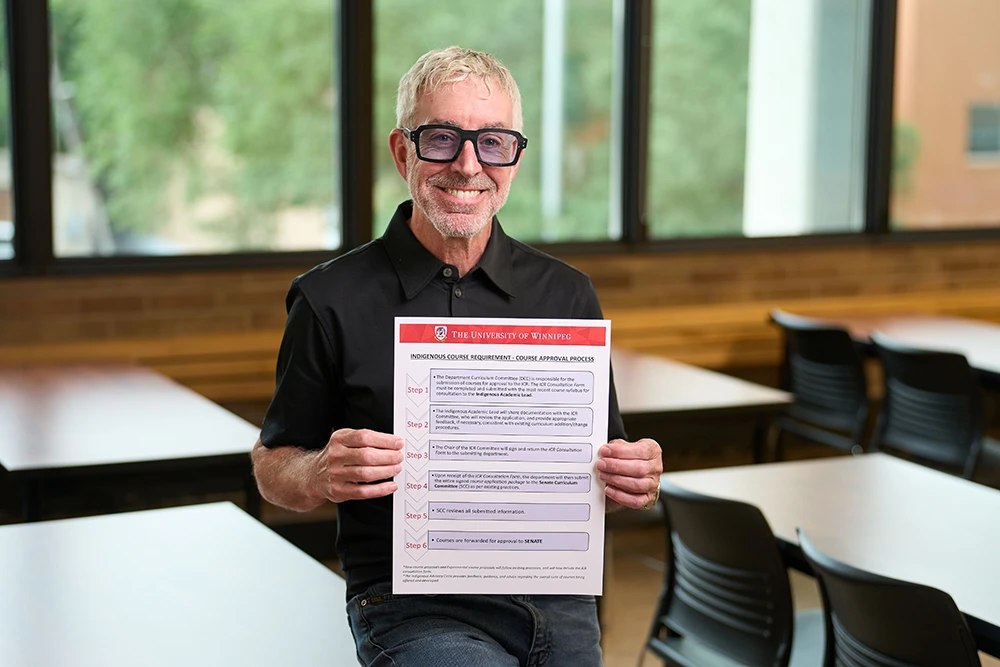
ICR Course Approval Process : Resolve and Purpose
Dr. Glenn Moulaison
Associate Professor, Department of Modern Languages and Literatures
This document is deceiving. As if the process for approving ICR courses was almost mechanical. Smooth. Automated. Requiring very little serious thought or expenditure of energy. The arrows point downwards as if gravity alone does the work. Like in nature. Everyone knows their role and what they have to do. You know who to send things to, who is responsible for what. Step two follows step one and comes before step three. Naturally. Don’t submit it to Senate before it’s been reviewed. Naturally. Signatures are needed. You will and must do this and everyone know what this is. Naturally. Of course the package is always complete on the first try. As per existing practices. As if.
What this document fails to show is the work that was done and the time that was spent doing it and the number of people who did the work and took the time to do it—especially in the Faculty of Arts, where the vast majority of ICR courses originated. Sometimes, work had to be done again, forms had to be refilled and resubmitted—to the right place this time—and signed again, by the right people this time, etc. This is quite normal. We are all well aware that processes such as the one that is outlined here are very time-consuming and rarely straightforward. Sometimes, arrows end up pointing in all directions at once. The document also fails to show the immense work that was done prior to the process and the work done after the process (including teaching)—by many of the same people.
And yet, in the end, the process worked. People had resolve, felt a purpose. People were engaged and committed, not only to the process itself, but to what was behind it. As if it really mattered. And it really did. And it really still does.