2026-2027
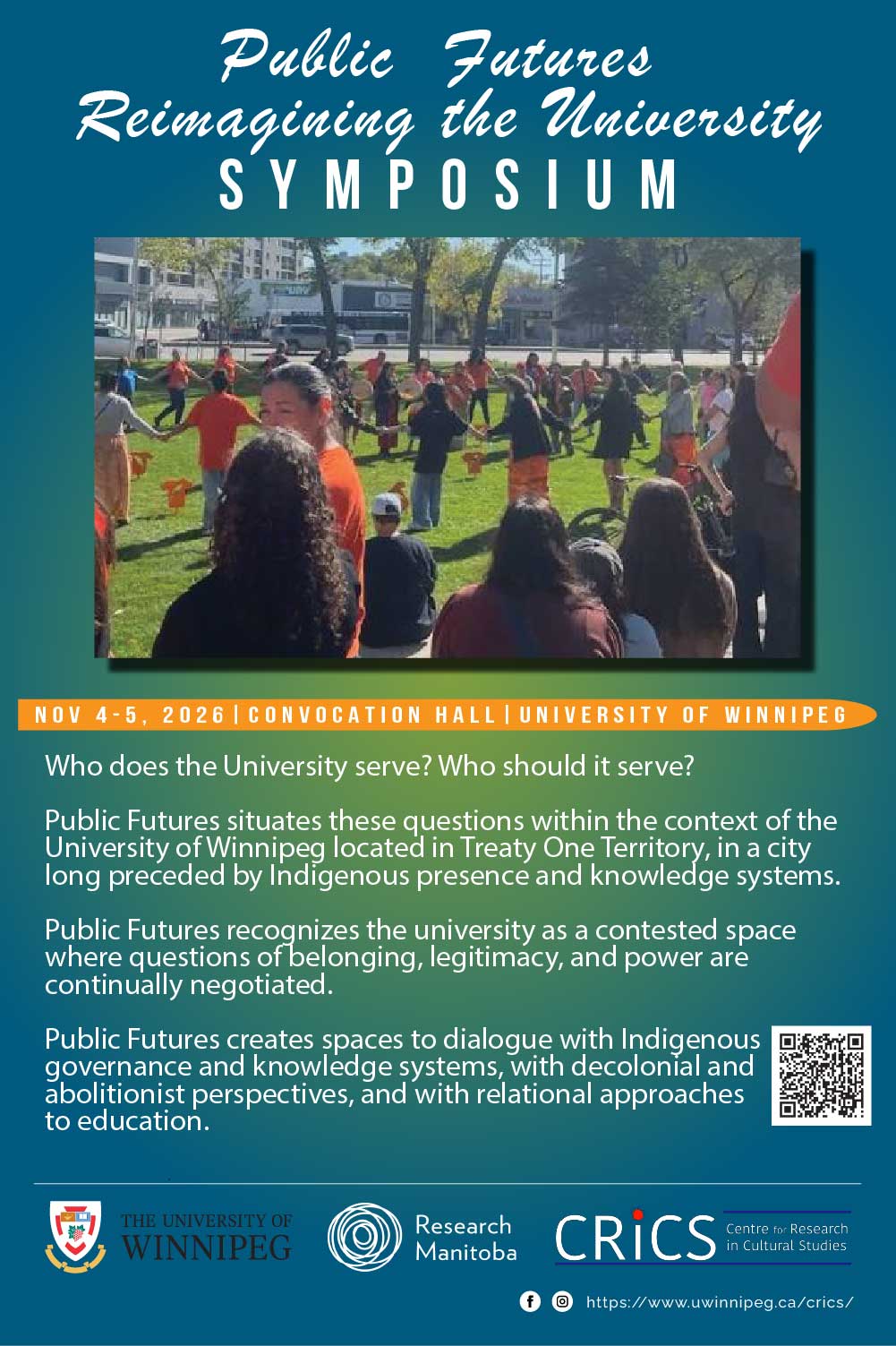
Public Futures: Reimagining the University Symposium
University of Winnipeg
November 4-5 2026
Who does the university serve? Who should it serve? Public Futures: Reimagining the University, situates these questions within the context of the University of Winnipeg located in Treaty One Territory, in a city long preceded by Indigenous presence and knowledge systems. Public Futures recognizes the university as a contested space where questions of belonging, legitimacy, and power are continually negotiated. Public Futures creates spaces to dialogue with Indigenous governance and knowledge systems, with community, with decolonial and abolitionist perspectives, and with relational approaches to education. It will generate alternative praxes for Canadian universities, with particular attention to the role of inner-city institutions, such as the University of Winnipeg.
Keynotes: Dawnis Kennedy (Anishinabe), Dr Dallas Hunt (Cree), and Professor Ann Lopez
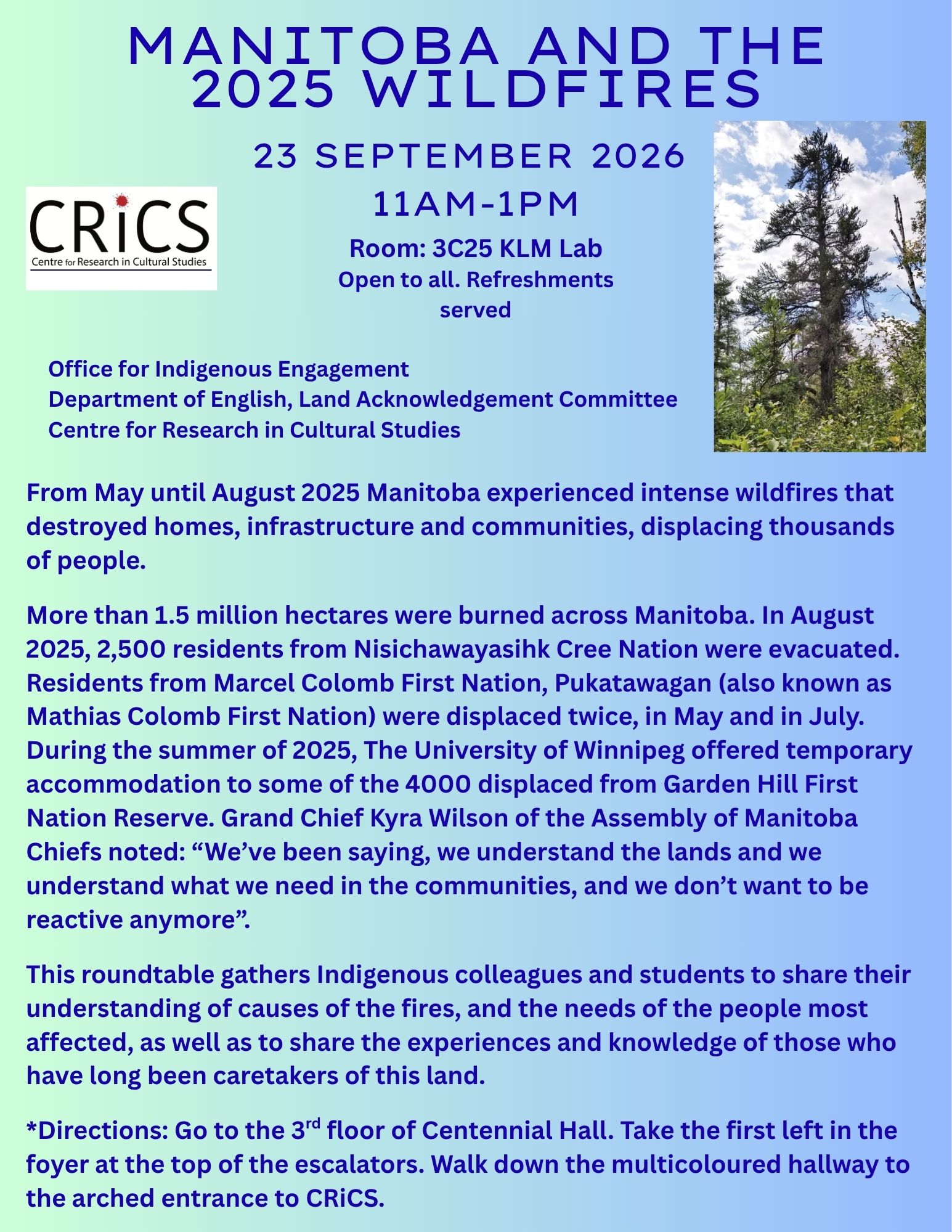
MANITOBA AND THE 2025 WILDFIRES
23 SEPTEMBER 2026 | 11AM-1PM
Centre for Research in Cultural Studies (Directions: Go to the 3 floor of Centennial Hall. Take the first left in the foyer at the top of the escalators. Walk down the multicoloured hallway to the arched entrance to CRiCS).
Room: 3C25 KLM Lab | Open to all. Refreshments served
Office for Indigenous Engagement
Department of English, Land Acknowledgement Committee
From May until August 2025 Manitoba experienced intense wildfires that destroyed homes, infrastructure and communities, displacing thousands of people.
More than 1.5 million hectares were burned across Manitoba. In August 2025, 2,500 residents from Nisichawayasihk Cree Nation were evacuated. Residents from Marcel Colomb First Nation, Pukatawagan (also known as Mathias Colomb First Nation) were displaced twice, in May and in July. During the summer of 2025, The University of Winnipeg offered temporary accommodation to some of the 4000 displaced from Garden Hill First Nation Reserve. Grand Chief Kyra Wilson of the Assembly of Manitoba
Chiefs noted: “We’ve been saying, we understand the lands and we understand what we need in the communities, and we don’t want to be reactive anymore”.
This roundtable gathers Indigenous colleagues and students to share their understanding of causes of the fires, and the needs of the people most affected, as well as to share the experiences and knowledge of those who have long been caretakers of this land.